Showing posts with label books. Show all posts

Sunday, May 11, 2014

Quotation of the Day: Books Edition

"I would be most content if my children grew up to be the kind of people who think decorating consists mostly of building enough bookshelves."

~Anna Quindlen, 
"Enough Bookshelves," 
New York Times, 7 August 1991

I am a voracious reader, and we have books everywhere in our house.


I must admit that most of my recent reading has been done on the Kindle app for the iPad. I feel like I'm betraying the gods of reading. Right now, though, I'm reading a paperback (Authority) which I bought instead of the Kindle version so that George can read it when I'm done. It's nice to have the weight and smell of the book in my hands. I will still be happy to go back to my eBooks. I like to be able to search and have a built-in dictionary.

How do you read books these days? And are there any books you'd recommend? 


Wednesday, October 3, 2012

Reading is Dangerous


Banned Books Week (September 30 - October 6) celebrates the freedom to read. 2012 marks the thirtieth anniversary of the event. How many of these frequently challenged classics have you read?

In high school, we were to read Of Mice and Men by John Steinbeck in my junior or senior year English class. A student complained about the cuss words, so our teacher had us read a ridiculous dramatization of it instead. I decided to engage in civil disobedience, and I refused to read the magazine-script version of the classic, but instead read the actual novel, even if it meant that I was going to get a reduced grade.

Saturday, August 11, 2012

Energy Problem

Only the most blindly optimistic deny the existence of an "energy problem," and nostalgia for the golden age of cheap fuels has already begun.
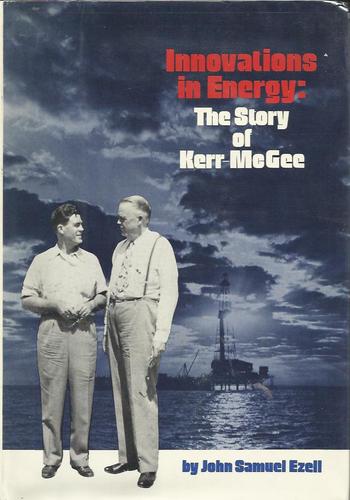
Sounds familiar, like something you might hear an environmental activist or political pundit say on the cable news channels? You might be surprised to learn that this quote came from a 1979 book about the Kerr-McGee Corporation. At the time, oil was $20 a barrel and gas $1 a gallon. Now, we see those as the golden days.

We haven't seemed to learn much in the time since Innovations in Energy was published. We still lament the costs of energy - and the damage convention fuel inflicts on the environment - but fail to change our behavior. Fossil fuels have significant subsidies from the U.S. government, while renewable energy programs gain only a fraction of support. The military, realizing that dependence on foreign fuel is a security issue, has attempted to increase its use of renewable energy sources, but is stymied by Congress (Ashbrook). Instead, we drill in ever more delicate areas, such as the Arctic region, or we pump hazardous fluid into the ground in the attempt to extract fuel sources. I wonder when things will be bad enough we will change our ways.

Ezell, John Samuel (1979). Innovations in Energy: The Story of Kerr-McGee. Norman, Oklahoma: University of Oklahoma Press, p. xi.

Thursday, July 19, 2012

Happy Birthday, Family Reading Partnership


This year, the Family Reading Partnership celebrates fifteen years in Ithaca! The organization strives to create a culture of literacy by promoting reading within families and through distributing free books to children. We applaud and support their efforts to instill a a love of books and reading in the community. Walter is proud to  pose by a 15th birthday lawn sign in our front yard.

Thursday, April 19, 2012

Dune

Dune by Frank Herbert

I just reread Dune, which I enjoyed (again) but was more disturbed by the gender relations than when I first read the novel in high school. Now, I'm rereading Dune Messiah, but I no longer have my copy, so downloaded it on my Kindle. This edition of Dune was printed originally in 1984 and retailed for $3.95.

Saturday, November 12, 2011

Help Children Receive Books - Free to You, Free to Them

The Literacy Site helps First Book at Room to Read provide books to children around the world. Each click helps pay for 1% of a book. Please click today - it's free to you and will help children around the world develop a love of reading.

Friday, June 10, 2011

Recent Reads

Woman on the Edge of TimeOryx and CrakeThe Year of the Flood

Although Woman on the Edge of Time was written in 1976, and Oryx and Crake and The Year of the Flood in 2003 and 2009, respectively, they are similar in their dystopian visions of the future. Perhaps reading the three novels within a span of a few weeks wasn't the best idea - rather depressing - but I cannot get the world of Oryx and Crake out of my head. 
Too many violent hands and hearts!
Dian, too sadly few like you —
For when a Species dies from Earth,
We die a little too.

Tuesday, May 17, 2011

Dark Places: A NovelI finished Dark Places: A Novel by Gillian Flynn. When I first picked it up in an airport bookstore, I was a little skeptical. A story revolving around the lone survivor of a family massacre reuniting with key figures for money? It sounded tawdry. I left the book in the store that day. Later, I did buy it, and it sat on the shelf for months, but needing to procrastinate grading was the perfect reason to pick it up.

The premise sold on the promotional copy really didn't do the book justice at all. I thought the book quite well-done. My favorite kind of book: a literary thriller that will never make it in a mass market edition. (So often, with mysteries, the number of copies sold is inversely related to the quality of the writing.) I was interested in the characters and fairly fascinated by their motives. Although the main character, Libby Day, wasn't exactly likable, I found myself liking her anyway. Her brother, Ben, is in jail for the murders of the Day mother and two other sisters, but during the period leading to the murders he is embroiled in self-destructive teen angst which is a theme of which I never tire.

Like Lisa Gardner and Michael Connelly (and probably others I am forgetting), first person chapters alternate with third person chapters. In Dark Places, the third person chapters are flashbacks. In the other books, the third person chapters are usually at the same time as the main story, told from the point of view of victim or killer. When did this structure become trendy and why do so many mystery writers employ it?

If you like Tana French's novels or The Church of Dead Girls: A Novel (Stephen Dobyns), Dark Places might be for you. I know that I am going to read Sharp Objects: A Novel, Flynn's first book, shortly.

Saturday, February 19, 2011

Reading Lolita in Tehran

Reading Lolita in TehranReading Lolita in Tehran by Azar Nafisi

My rating: 3 of 5 stars


I really enjoyed Nafisi's descriptions of life in Iran - I hadn't really understood what it was like during the Islamic Revolution in the late 1970s/early 1980s. I also enjoyed the commentary on the featured English and American novels. However, I hated the way it was written, so much that I had to psych myself up to resume reading after each hiatus. I began hating Azar Nafisi herself. To me, she's guilty of arrogance. One of her key themes is that villains are evil because they lack empathy. I also think villains are evil because they lack self-reflection. I found Nafisi to be supercilious without a deeper self-awareness. I don't regret reading this book, but I am sure glad I am done with it.

View all my reviews

Saturday, January 29, 2011

Cutting for Stone

(CUTTING FOR STONE,CONTRIBUTOR(S)) VERGHESE, ABRAHAM (AUTHOR) BY VERGHESE, ABRAHAM[AUTHOR]Hardcover{Cutting for Stone,Contributor(s): Verghese, Abraham (Author)} on 2009I finished Cutting for Stone, and I'm not sure what to think of it. Back in college, I read Verghese's book, My Own Country: A Doctor's Story, and found it interesting, so back in  2009, when Cutting for Stone was released to positive reviews, I decided to read it, but with one thing and another didn't open the book until this winter. (Reading and knitting is all winter is good for.)

Since Verghese is a medical doctor, it's not surprising that his descriptions of illness, surgery, and even the doctor-patient relationship are rich and detailed. (So detailed that one user on Goodreads suggested the squeamish should skip passages.) Confession: I did skip three pages, but they were not about medical procedures but about puppies.

The invocation of Ethiopian culture, even from the perspective of the sheltered Missing Hospital, was interesting to me, as was the backdrop of Ethiopian politics and the Eritrean resistance. My favorite characters, and I thought the characters most vividly drawn, were Hema and Ghosh.  More than once during the novel, I couldn't keep from tearing up.

For the most part then, I thought this was a great novel. At the same time, I felt a little bit like the king in Amadeus who reacts to Mozart's opera premier with the observation, "There were too many notes." The vividness Verghese brought to descriptions of the body, however, were not applied to the heart. Marion, the narrator, Shiva, his twin, and Gerte, their almost-sister, were not as fully drawn as I would like, especially in comparison to the sometimes plodding exposition. The ending didn't completely satisfy me, though I'm not sure what I would have wanted instead.

Despite the criticisms, I think this is a book worth reading, and I recommend it.

On another note - what is it with Indian authors and twins? I don't want to say what happened in Cutting for Stone, but it reminded me of another novel of twins, The God of Small Things, the ending of which disturbs me to this day.

Thursday, January 20, 2011

Stuff

Stuff: Compulsive Hoarding and the Meaning of ThingsCurrently, I am reading Stuff: Compulsive Hoarding and the Meaning of Things by Randy Frost and Gail Stekette. So far, it's good, though it's funny to read a popular book based on academic research. I want to know about sampling, study design, and p-values! I considered skipping the chapter on animal hoarding but decided to read it. It was quite tame, and a little disappointing. I don't know if the authors were trying to sanitize the issue or if it is truly because so little research has been done on that particular aspect of hoarding. I think I wanted more about the impact of animal hoarding on the animals themselves. The case study they used for the topic seemed so outrageous, I think it belies the seriousness of the issue. I wondered if that chapter was included due to an editor's insistence. But I digress.

I'm very fascinated by hoarding, and watch Hoarders and Hoarding: Buried Alive, even though I feel the shows are exploitive. George referred to one of the shows recently (I think comparing my behavior to that of a person featured on the episode). I asked him which one of the two shows, and he replied, "You know, the one that actually tries to help people." By that he meant TLC's Hoarding: Buried Alive which is a longer, more thoughtful process-based intervention than the dramatic (and likely destructive) weekend cleanup depicted on Hoarders on A&E. In an interview with Salon, Frost takes both shows to task.

Do you secretly (or not-so-secretly) watch these shows? Do you know a hoarder? How has it impacted you?

Salon.com interview with Randy Frost.

Tuesday, January 4, 2011

2011 Book Challenge

Lauren's post "TBR Challenge 2011" introduced me to the "to be read" challenge sponsored by the Book Addicts! group on Goodreads. (My book montage on the blog's sidebar comes from Goodreads.) For the challenge, members choose twelve books and two alternates to read during 2011. These must be books published before 2010, in other words, books that have been on the to-read list for quite some time. I decided to join, and I picked the following books:


BookBox: embed book widget, share book list


Because they are mysteries, the books I'm choosing as alternates are:

Hopefully, I will be more successful reading in 2011 than I was in 2010 - I didn't even finish 25 books last year!

Tuesday, December 21, 2010

"Unnecessary" Quotation Marks

The Book of "Unnecessary" Quotation Marks: A Celebration of Creative PunctuationMy aunt got me The Book of "Unnecessary" Quotation Marks: A Celebration of Creative Punctuation. It has kept me laughing all night! If you are a grammar fanatic, you will love this book.

It includes photos of "signs" with unnecessary "quotation marks" along with humorous comments. I believe the book is an offshoot of the blog of "unnecessary" quotation marks. If you like this humor, you'll also enjoy the Red Pen blog!


"unnecessary" quotes

Wednesday, July 28, 2010

Quotation of the Day

“Make no judgments where you have no compassion."

~Anne McCaffrey, Dragonquest


Monday, July 26, 2010

Mosiac Monday: Books

I've been doing lots of reading this summer, so books seemed an appropriate theme for today's mosaic!

books

Thanks to Mary at the Little Red House for hosting Mosaic Monday!

Saturday, July 24, 2010

BOOK: "Faithful Place" by Tana French

Faithful Place: A Novel
Last week, I finished Faithful Place: A Novel by Tana French. On the strength of her two previous books (The Likeness: A Novel and In the Woods), I preordered the book so I'd have it as soon as I could after publication. Tana French's novels are literary mysteries set in Dublin. I love mysteries, but I demand they be well-written, so I was delighted to discover French last year. In some ways, In the Woods was my favorite - it had so many layers - but the ending was unsatisfying. I was intrigued by the story and characters in The Likeness, especially the cadre of university outcasts, but the premise was so outlandish, the book stretched credibility.

French has certainly learned from her prior work. Faithful Place is compact, efficient, and well-written, not to mention compelling and fast-paced. In it, Frank Mackey, the undercover who orchestrated Cassie Maddox's operation in The Likeness, confronts the truth that his first love, Rose, did not leave him on the eve of their planned escape from Faithful Place to London, but was instead murdered. Twenty-two years after that night, Frank returns to the neighborhood of his youth to try to understand what happened to Rose and find out who killed her. Officially, Frank is not on the case, and he butts heads with Scorcher, who is the detective in charge. He also is mistrusted by the neighborhood, many of whom think he himself killed Rose.

As Frank investigates Rose's death, his past is uncovered, and it is sad and horrifying. At the same time, I wondered if he could really stay away from his family for almost two decades. Faithful Place is a neighborhood in Dublin, not another town in Ireland, not another country. While he had encountered his younger sister Jackie during an earlier investigation and reestablished ties with her, Frank had three other siblings, nieces, nephews. Would it really be possible to make such a break?

Besides this nagging issue, I really did like the novel. I found myself thinking in Irish slang! When I began the book, I was concerned - Frank was a typical, alpha male prick, rustling feathers because he could get away with it. He quickly became more likable - perhaps that persona was disrupted when he learned that Rose was dead, hadn't left him. It initiated a process of reimagining his history.

Thursday, July 22, 2010

Spanish Flu

Currently, I am reading The Given Day: A Novel, which is set in 1918-1919 (and perhaps later, though I haven't gotten that far). This is not a time period I've spent much time considering, though Bad Blood: The Tuskegee Syphilis Experiment had some events in that time period. In any case, I'm finding the story and the historical context quite fascinating. So far, the novel tells two parallel stories, one of Danny, a Boston policeman of Irish heritage who is son and uncle two high-ranking members of the force, the other of Luther, a Black munitions worker who, when laid off at the factory to make room for jobs for white veterans, moves to Greenwood (Tulsa). I am very curious how or if these two stories will come together, but at the moment, both Danny and Luther have survived the influenza pandemic of 1918. In the book, the illness moves so quickly and is so debilitating and deadly. While people seem to have little protection, they do wear masks, and in most communities, it's illegal to go without them. Despite the danger, policemen in Boston must patrol their beats and deal with the violence that comes out of fear and anxiety. They are often among the first responders and are called upon to help the sick or remove dead bodies, though the police department provides no death benefits because it claims police officers could easily have contracted the grippe outside of work.

Curious, I read online about the epidemic and found some interesting photographs at the national archives.

This streetcar driver refuses to let an unmasked passenger on the car.

Postal workers who came into contact with the pubic were required to wear masks.

These Seattle police officers wore masks made by members of the Red Cross.
The Influenza Epic of 1918 at the National Archives
Related Posts with Thumbnails